
Our fleet
The right vehicle comes out of the job, not the other way round
People usually ask us for a HIAB. What they actually need is a particular kind of lorry, and which one that is depends far more on where the load has to end up than on the load itself. A big item in an open yard is often an easy job. A small item down a terraced street with cables across it is not.
So we run a mixed fleet on purpose. Rigids for tight places, artics and wagon and drag outfits for long or bulky loads, and low loaders for plant that drives on. Everything is ours, everything is maintained by us, and everything goes out with one of our own drivers.
The way to get the right vehicle on the day is simple. Tell us about the access. The gate width, the turning room, the slope, the surface, what is overhead, and whether anything is parked where the lorry will need to stand. Those details decide the vehicle, the time on site and the price, so they are worth putting in your email.
What we run
The vehicle types, and the jobs each one is for
| Vehicle | What it suits | Where it struggles |
|---|---|---|
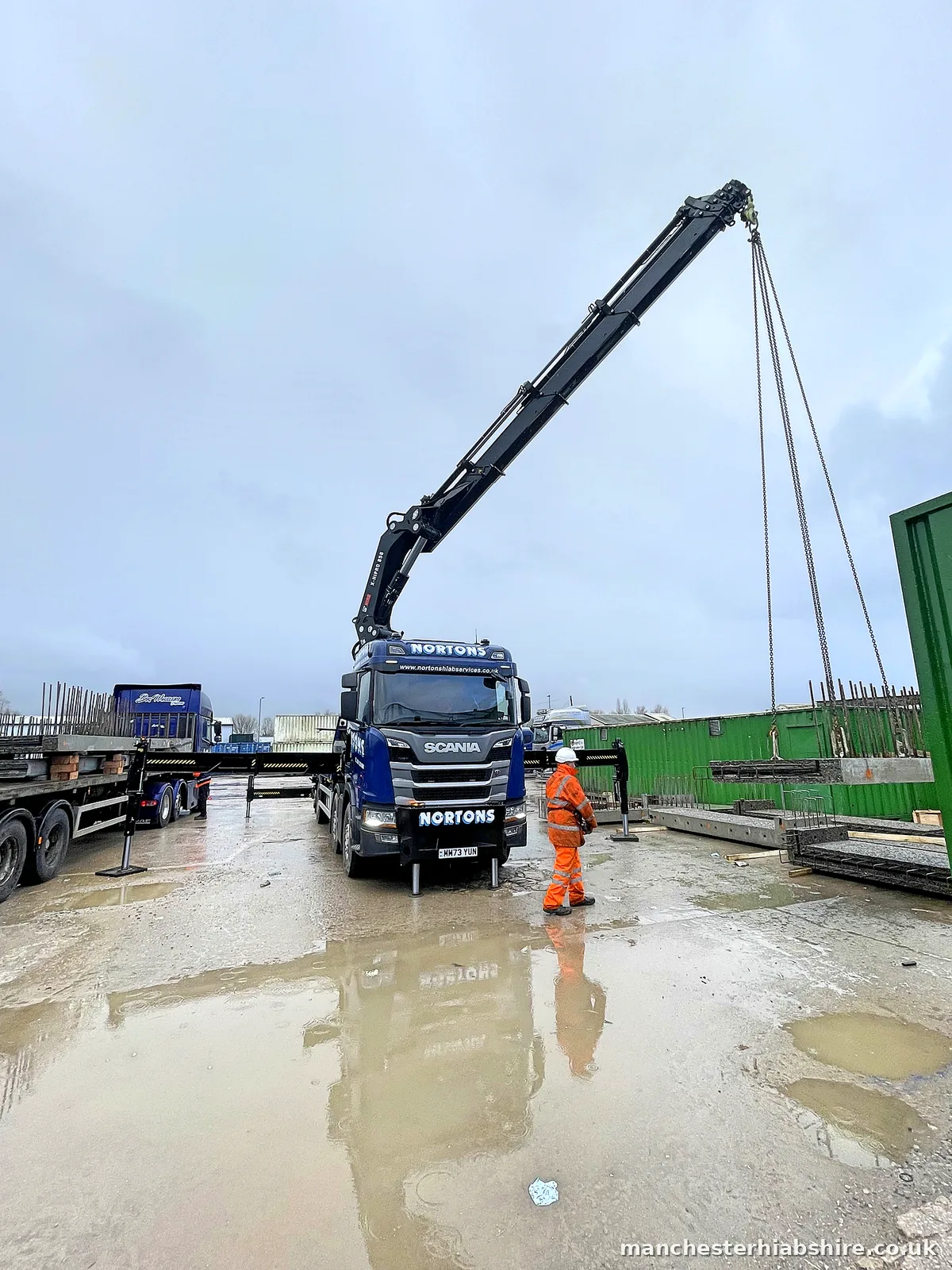
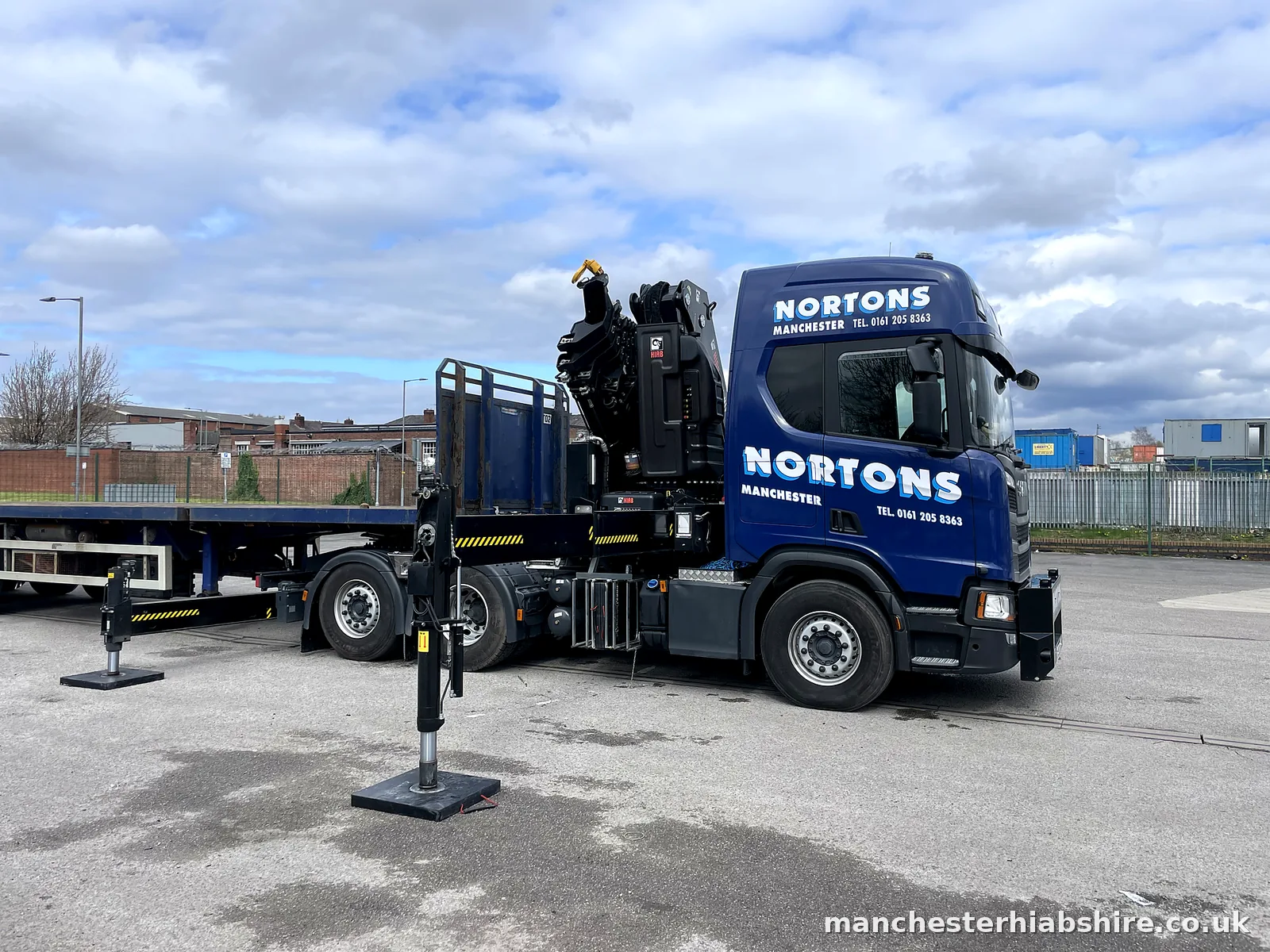
| Rigid HIAB lorries | The everyday vehicle. One load, carried and lifted by the same lorry, and the best bet for yards, streets and sites an artic cannot get into. | Loads that are very long. |
| Articulated HIABs | Long, bulky or heavy loads that will not sit on a rigid. | Tight lanes and small yards. It needs room to come in, swing round and get back out. |
| Wagon and drag outfits | Two loads to one site in one run. The trailer can be dropped and the lorry taken in on its own where access is poor. | Anywhere there is nowhere sensible to leave the trailer. |
| Flatbed trailers | Crated, palletised and awkwardly shaped goods loaded and unloaded from above or the side. | Tracked plant that needs a ramp to get aboard. |
| Extendable trailers | Items longer than a standard flat will carry. | Manoeuvring. They are slower and want a decent approach, so they suit open sites and wide roads. |
| Low loaders | Tracked and wheeled plant that drives on up ramps, and machines too tall to travel on a flat. | Soft or sloping ground. It needs firm, reasonably level ground to load and unload on. |
Chains, slings, brick grabs and lifting beams travel with the vehicle, so there is nothing else for you to arrange or have waiting. Where one load genuinely needs two vehicles, they are paired up and planned as one job rather than two bookings that happen to fall on the same day.
Tell us about the access and the rest follows
Email us and describe it in plain terms. What the item is, roughly how big and how heavy, where it is now, where it is going, and what is in the way at each end. A photograph of the access helps more than anything else.
We plan every lift before the lorry sets off, so we will tell you which vehicle is coming and what we need from you before it gets there.
Common questions
Questions about the vehicles
Which vehicle will you send?
Whichever one the job needs, which we work out from three things: what the item is, where it has to end up, and what the access is like at both ends. Tell us those and we will tell you what is coming. People often ask for a particular vehicle because it is what turned up last time, and it is not always the right one for this job.
Can you get down a narrow lane?
Often yes, and that is usually a job for a rigid rather than an artic. What decides it is the width at the tightest point, whether there is anywhere to turn round at the end, overhanging trees and cables, and parked cars. Tell us about all of that when you email. If the lane really is too tight, there are usually other ways, such as standing at the top and lifting in, or splitting the load.
Do all your vehicles have the HIAB on them?
No, and that is deliberate. Most do, because the whole point is to carry the load and lift it with one vehicle. Low loaders and some of the trailers do not, because the machines they carry are driven on and off up ramps and a lift is not needed. If your job needs lifting, we send something with the HIAB on it.
Do your vehicles come with a driver?
Yes. Every vehicle goes out with one of our own drivers, ALLMI and CPCS trained, who knows the lorry and the lift.
Do you run anything smaller?
No. Our vehicles are full size lorries and the smallest thing we run is a rigid. That sounds like a problem for a one item job and usually is not, because a single item on a full size lorry with the lift already on it is still often the cheapest way to move it. There is more about that on our small loads page.
Related