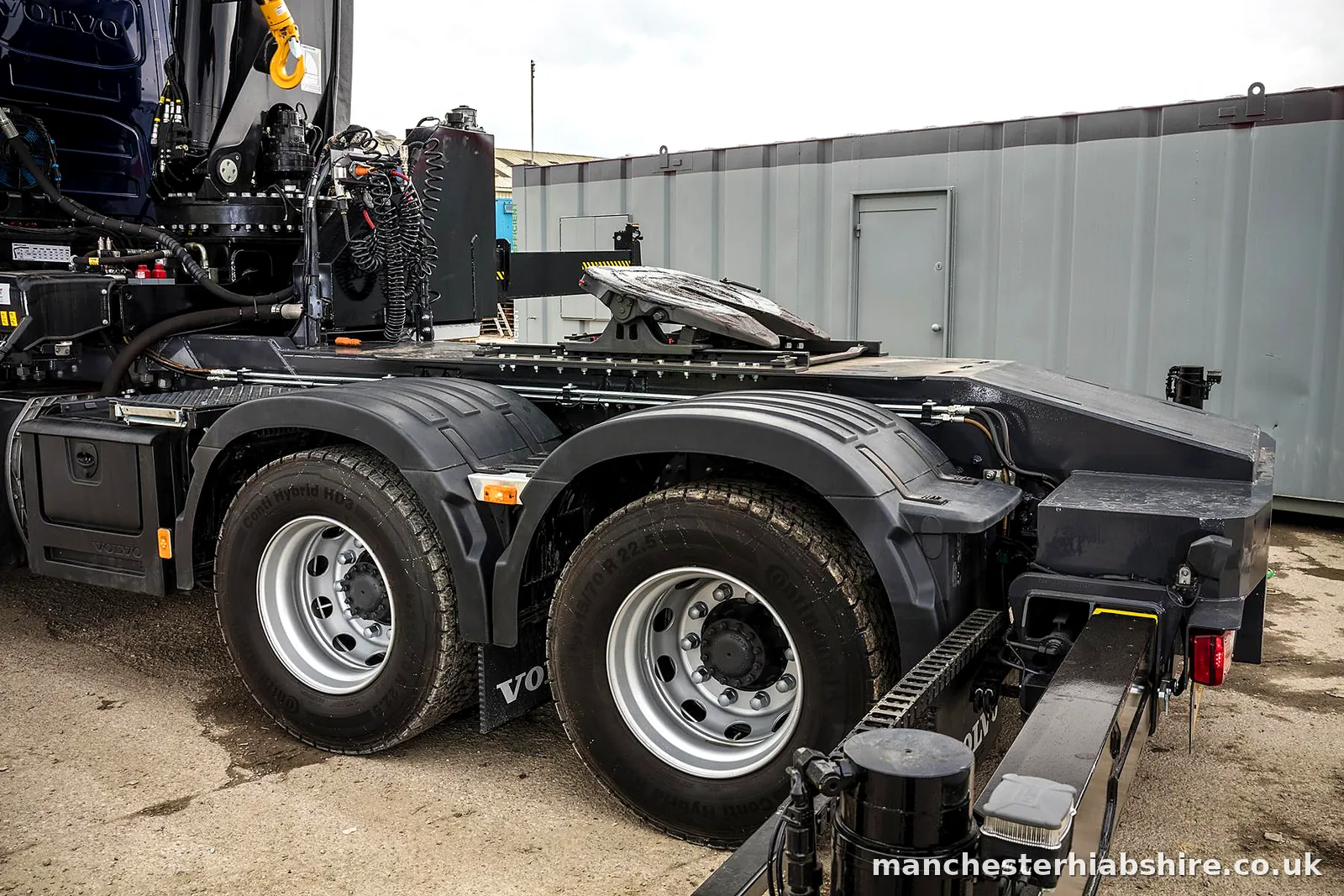
Some jobs are half an hour and some take a morning, and the difference is rarely the weight. It is nearly always one of three things, and all three can be settled from your desk before anybody sets off.
Where the lorry can stand
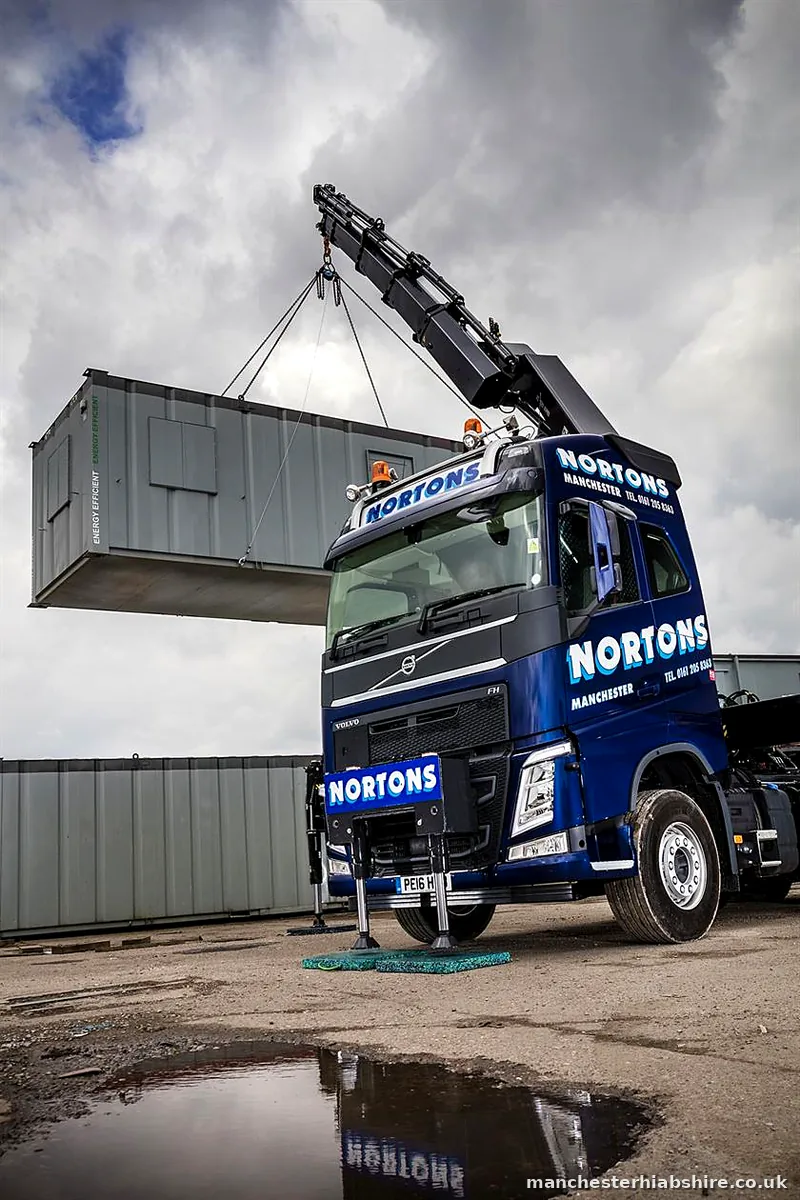
The boom lifts from wherever the lorry is standing, so the standing position is the job. What we are looking for is somewhere within reach of the drop point, with room for the outrigger legs to come down on both sides, and a way in that a full size lorry can actually take.
That is why we ask about the entrance, the turn in off the main road, the bollards, the parked cars and what is strung overhead. A yard with a wide gate and a clear side is a quick job. A back garden reached from a narrow lane needs working out first, and usually still goes ahead once we know where the lorry will sit.
What the ground will carry
Everything goes through four small feet. Tarmac, concrete and block paving are straightforward. Gravel, grass, a new drive, a recently backfilled trench, a cellar or a service duct under the standing position all need knowing about in advance, because the answer is usually mats or a different position rather than a different day.
Tell us what the surface is and when it went down. If a drive is only a few weeks old, say so, and we will plan to spread the load.
How the load is made to be picked up
An item lifts well when there is something sound to lift it by and we know what is inside it. Lifting eyes, a frame, forks pockets, a strong roof frame on a cabin, a drained and empty tank, a container with the doors secured and the contents strapped down.
So when you get in touch, tell us what the lifting points are, whether it is empty, and whether anything inside it can move. If you are not sure, a photograph of the top and one of the corner tells us most of it. Where there is nothing obvious to sling from, there is usually a way round it, and it is far easier to work that out a week before than on the morning.
Send these four things
- a photograph looking at the entrance from the road
- a photograph from where the item has to end up
- a photograph of the item, including a lifting point if it has one
- a line about the ground and anything overhead
That is enough for us to plan the standing position, pick the vehicle and tell you how long we will need. It is also what makes the day itself uneventful, which is what you are paying for.
Our HIAB hire cost page explains what drives a price, and the services page shows the sorts of work these questions get asked about.
Email us at info@manchesterhiabshire.co.uk, describe the job as it really is, and you will get a straight answer.
Need a lorry? Ask for a quote or email us and tell us what needs moving.