
Precast concrete
Heavy, unforgiving, and it has to land level
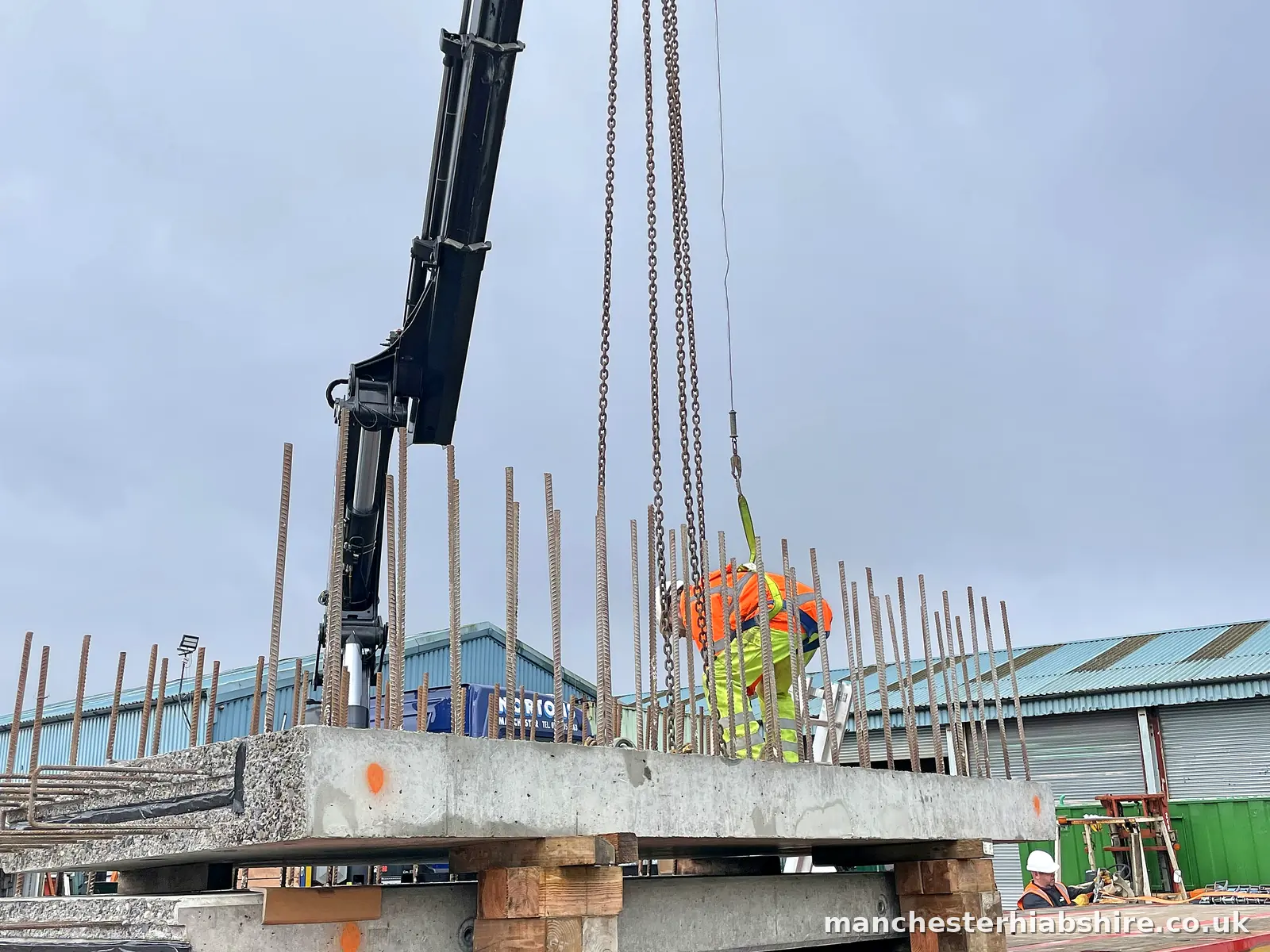
Precast concrete gives you no second chances. A plank or a panel is heavy, it is long, and once it is swinging it wants to keep going. It also has to be set down flat and in the right place, because moving it again on site means finding something else to lift it with.
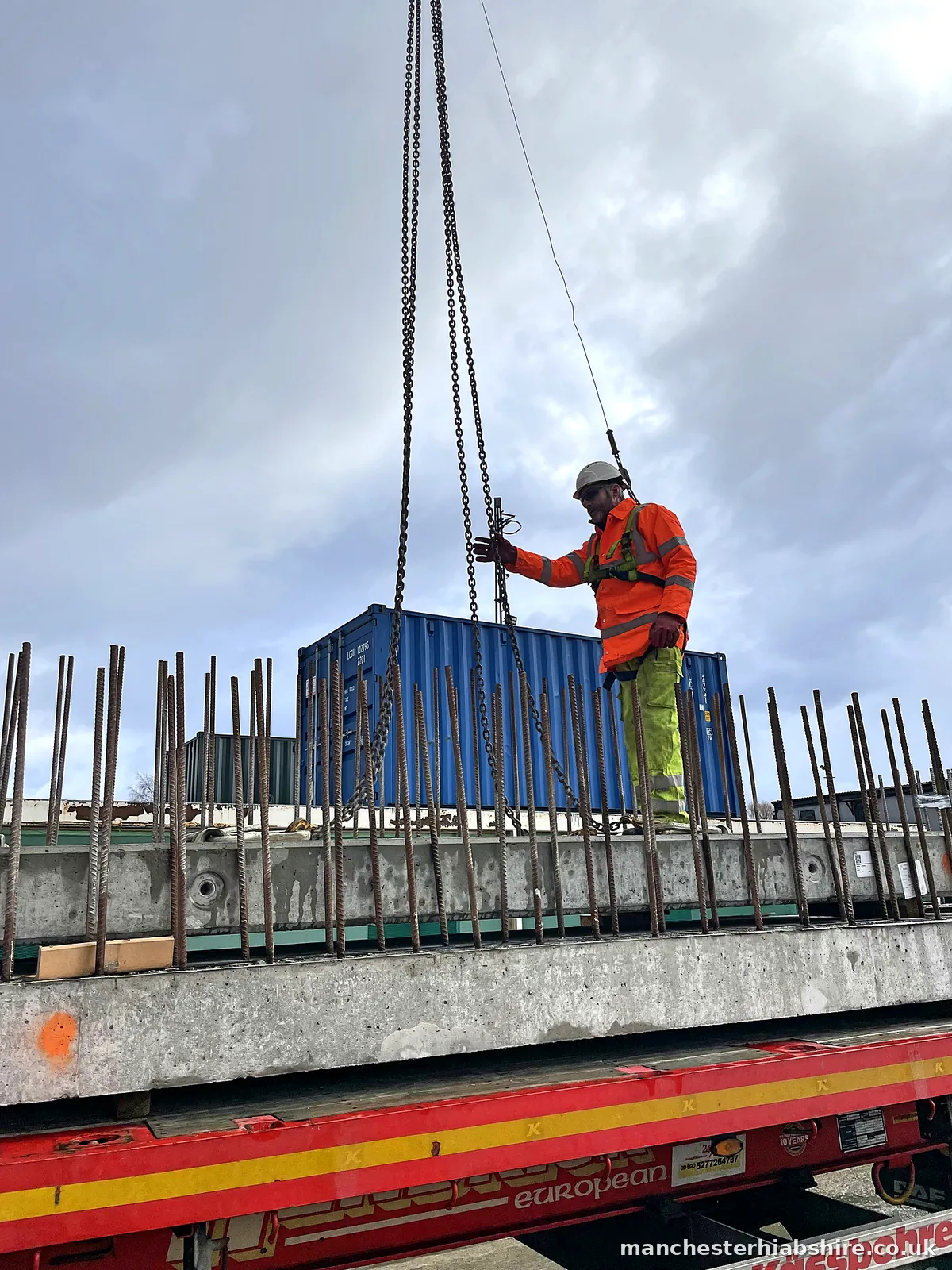
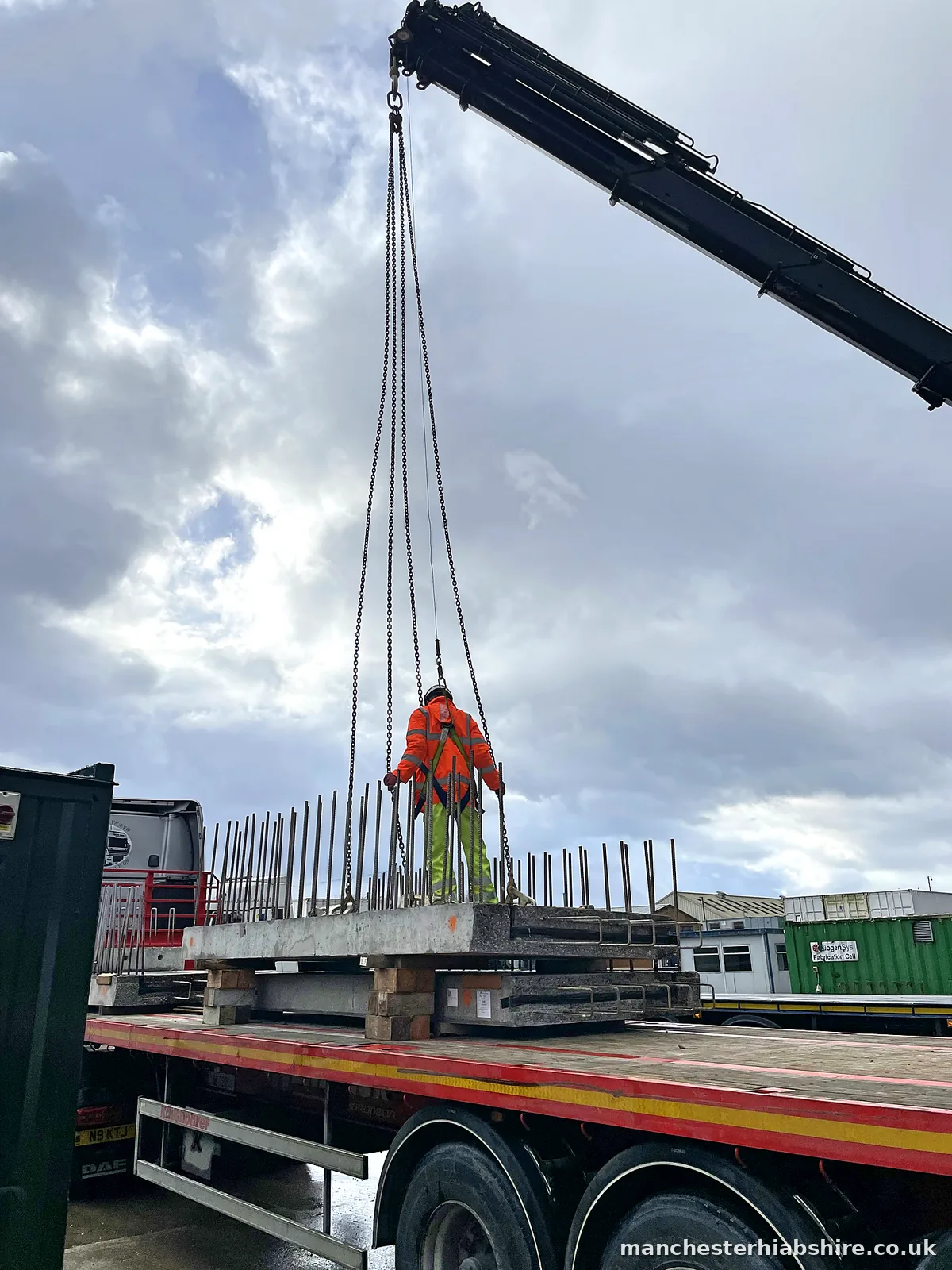
Our lorries bring the load and do the lift, so there is nothing else to book. We come in, set the outriggers down on mats, take the units off the bed on chains and lower them where your crew want them. The driver has done it before, which on a groundworks site matters more than anything written on the side of the lorry.
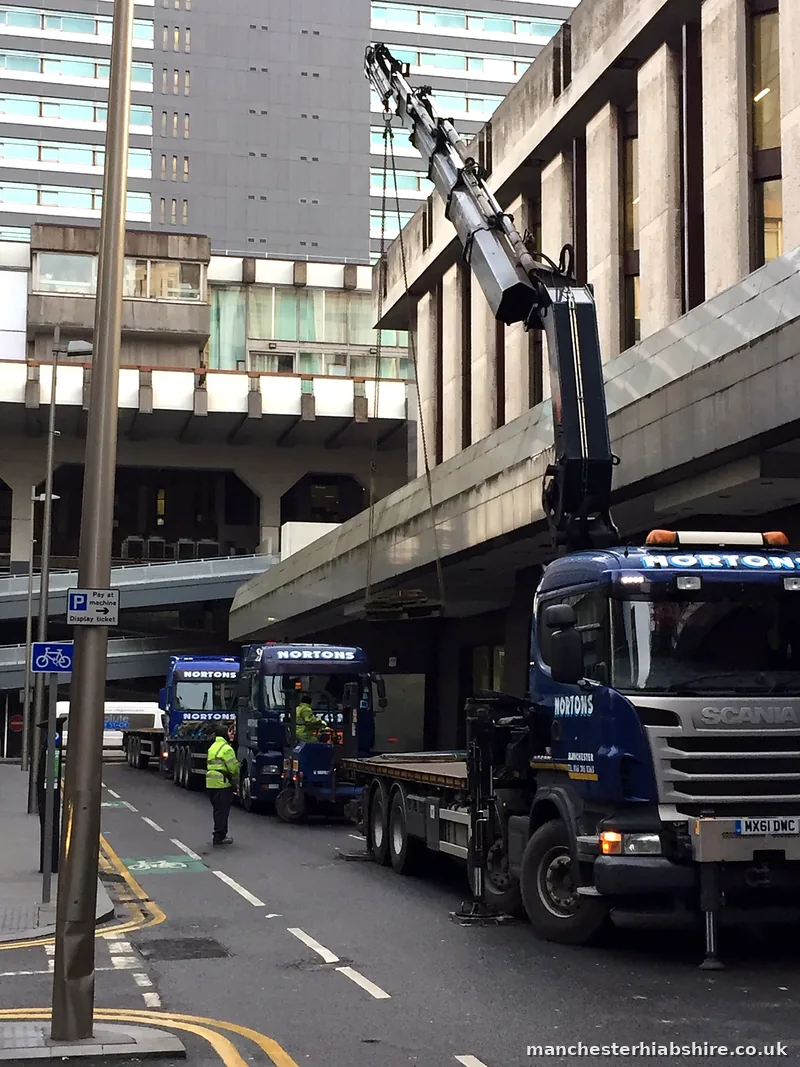
Most of this work is around Greater Manchester and the North West, on housing sites, industrial units, basements and civils jobs. We also run further afield when a precast works in one county is supplying a site in another.
What we carry
The precast and groundworks loads we get asked for
- Precast floor planks and beam and block components
- Wall panels, retaining units and stair flights
- Manhole rings, cover slabs and chamber sections
- Kerbs, edgings and channel units, loose or palletised
- Paving flags, setts and block paving packs
- Concrete bollards, planters and street furniture
- Drainage pipes, culvert sections and headwalls
- Collection direct from the precast works to your site
- Repositioning units already on site, from the compound to the dig
- Staged deliveries over several days, timed to the groundworks programme
Where the lorry stands decides everything
On a finished site a lift is straightforward. On a groundworks site it rarely is. There is an open excavation, a stack of rebar, a soft haul road and a gate that was designed for a transit. The lift itself is the easy part. Getting the lorry to a spot it can safely work from is the part that needs thinking about first.
So tell us what we are coming into. The state of the ground, what is on the way in, how close we can get to the drop and whether there is anything overhead. None of it necessarily stops the job, but all of it changes which vehicle we send and how long we need to be there.
Common questions
Precast concrete transport, answered
Can you set the units down in the order we need them?
Yes, and it is worth telling us before we load. The order the units come off the bed is decided when they go on it, so if you need the first plank to be the one nearest the wall, say so when you book and we will load to suit.
Will you lift the units straight into position?
Where the ground and the access allow it, yes. That is the point of the HIAB. If we can stand the lorry in the right place we can set planks and panels down where they are going rather than stacking them on the compound and leaving you to double handle them.
Do you collect from the precast works?
We do it most weeks. Give us the supplier, the works address and your site and we will deal with both ends. Most precast yards load us on their own gear and we chain down and go.
What about kerbs, bollards and paving rather than big units?
Same job, smaller pieces. Palletised kerbs and paving flags come off with the lift, set down where they have to land, with the lorry standing on the firmest ground available.
Our site is muddy and the roads are not in yet. Is that a problem?
It is the usual condition of a groundworks site and it does not stop us, but it changes what we can promise. Tell us what the running surface is like and whether there is anywhere solid to set the legs down, and we will tell you honestly what we can reach from there.
Can you do a run of loads over several days?
Yes. A lot of our precast work is booked as a sequence rather than a single delivery, timed around the crew and the dig. Email us with the programme and we will fit the loads to it.