When somebody rings about a lift, they nearly always lead with the item. How heavy it is, how big it is, whether it is an awkward shape. All useful, but it is rarely what settles the job.
The question that settles it is simpler and less obvious. Can the lorry get to a position it can lift from, and can it set up properly once it is there.
The boom starts where the lorry stops
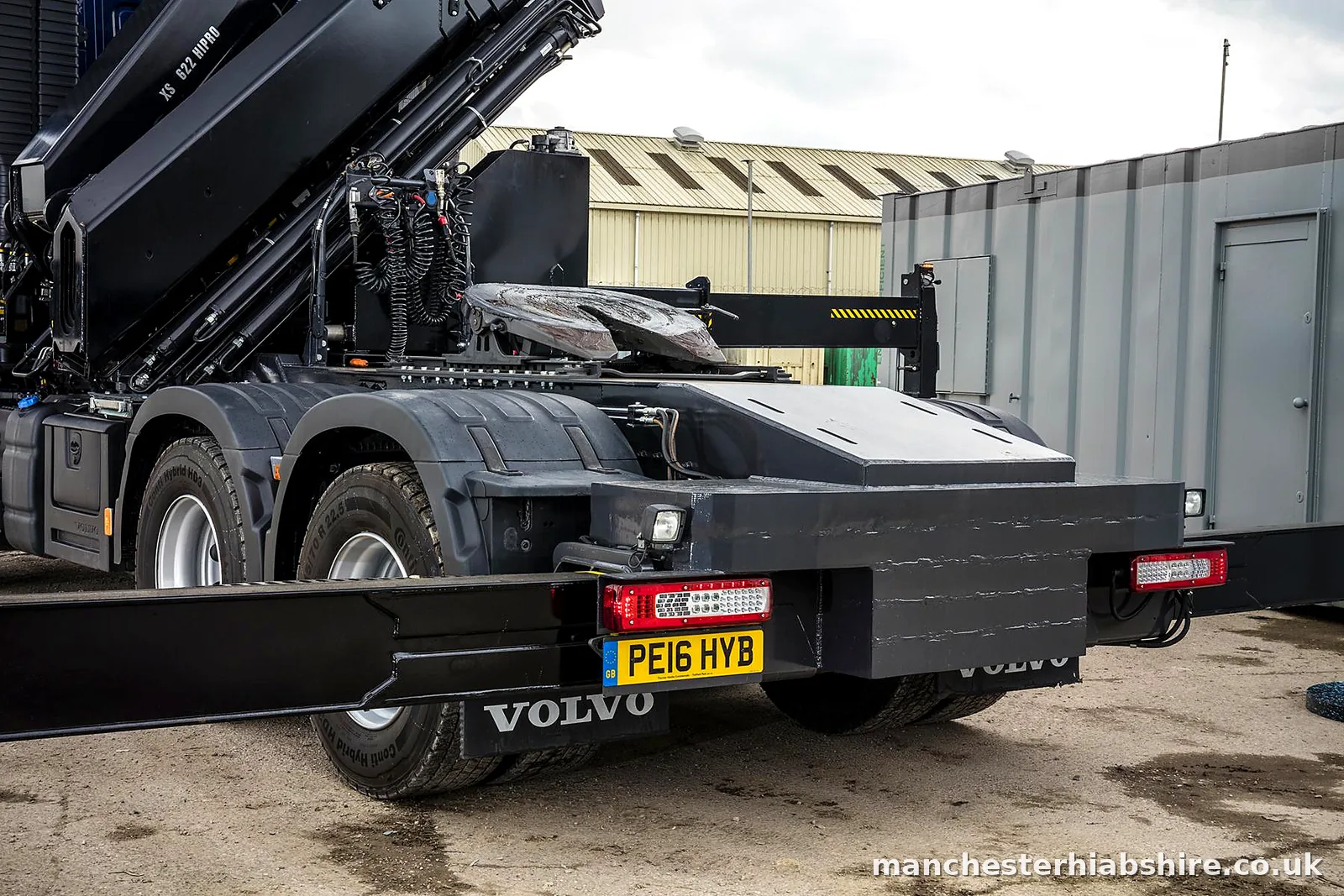
A HIAB is a lorry with a boom on the back of it. That sounds too obvious to be worth saying, but it is the whole point. The boom does not travel. It works from the chassis, so it only ever reaches out from the spot the lorry is parked in. Move the lorry ten feet closer and a difficult lift becomes an easy one. Take away the spot it was going to stand in and there may be no lift at all.
So when we ask about the entrance, the turn in, the parked cars and the overhead wires, we are not filling in a form. We are working out where the lorry can physically end up, because that single answer decides the rest.
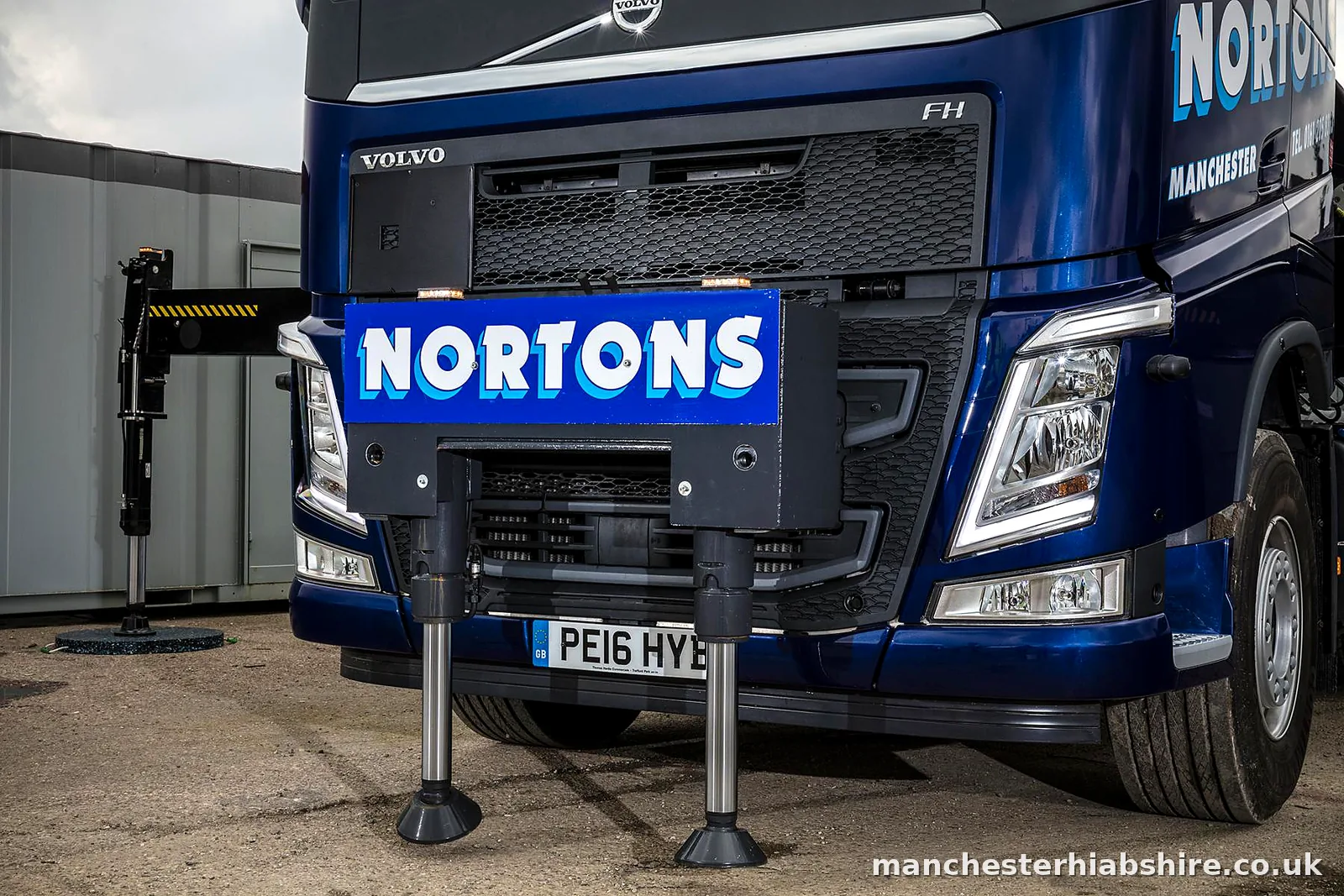
There is a second half to it. Once the lorry is in position it has to put its legs down. The outriggers go out sideways, which means we need room beside the lorry as well as room for the lorry itself. A lane that a lorry can drive down is not necessarily a lane it can set up in.
What we are looking at when we ask
Width first. Not just the gateway but the whole run in, including the pinch points people stop noticing after the first week on a site. Then the turn, because a long vehicle needs swing room to get off a main road and a gate set back off the pavement is often the thing that stops it.
Then what is above. Cables, phone lines, tree branches, a canopy over a loading bay, the corner of a first floor. The boom has to come up before it goes out, and anything overhead limits that before the load is anywhere near the hook.
Then the ground, because the legs concentrate a great deal of weight into four small feet. Block paving, a manhole cover, a soft verge or a newly backfilled trench all change how and where we set up.
Then the far end. People describe the collection point in detail and forget the delivery. Both ends have to work.
When access is genuinely tight
Tight does not mean impossible. It usually means we work out a different standing position, or lift from further back, which is what our long reach HIAB page is about. Sometimes it means two shorter moves rather than one long one, setting down in an accessible spot and repositioning. Occasionally it means we tell you honestly that the access rules it out and it needs a different sort of company and different kit.
What it always means is that we would rather know before the day than find out on it. A wasted visit costs you time and costs us a lorry.
The quickest way through all of this is a couple of photographs and a phone call. Email us at info@manchesterhiabshire.co.uk, tell us what you have got and where it has to go, and we will tell you what will fit.
Need a lorry? Ask for a quote or email us and tell us what needs moving.