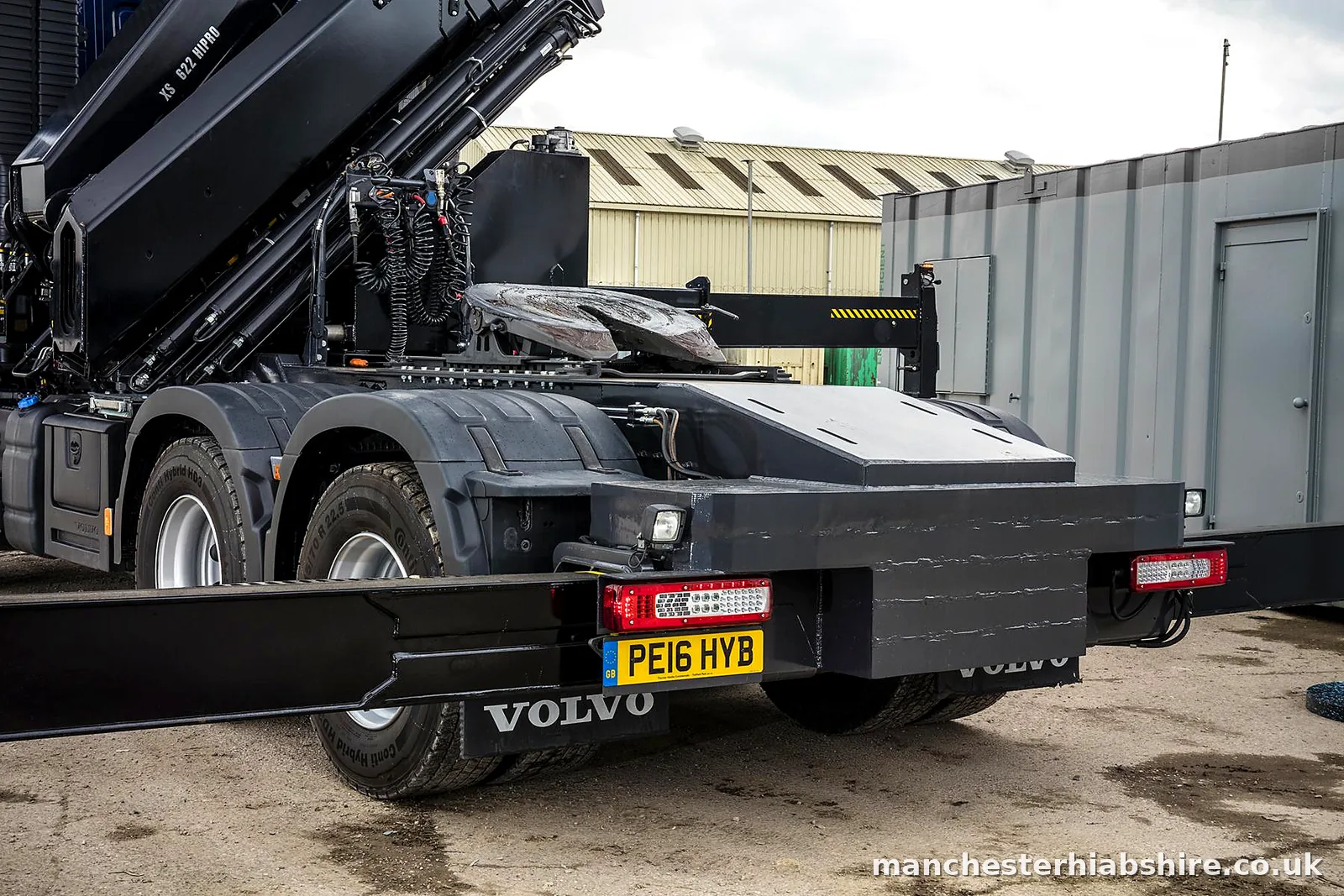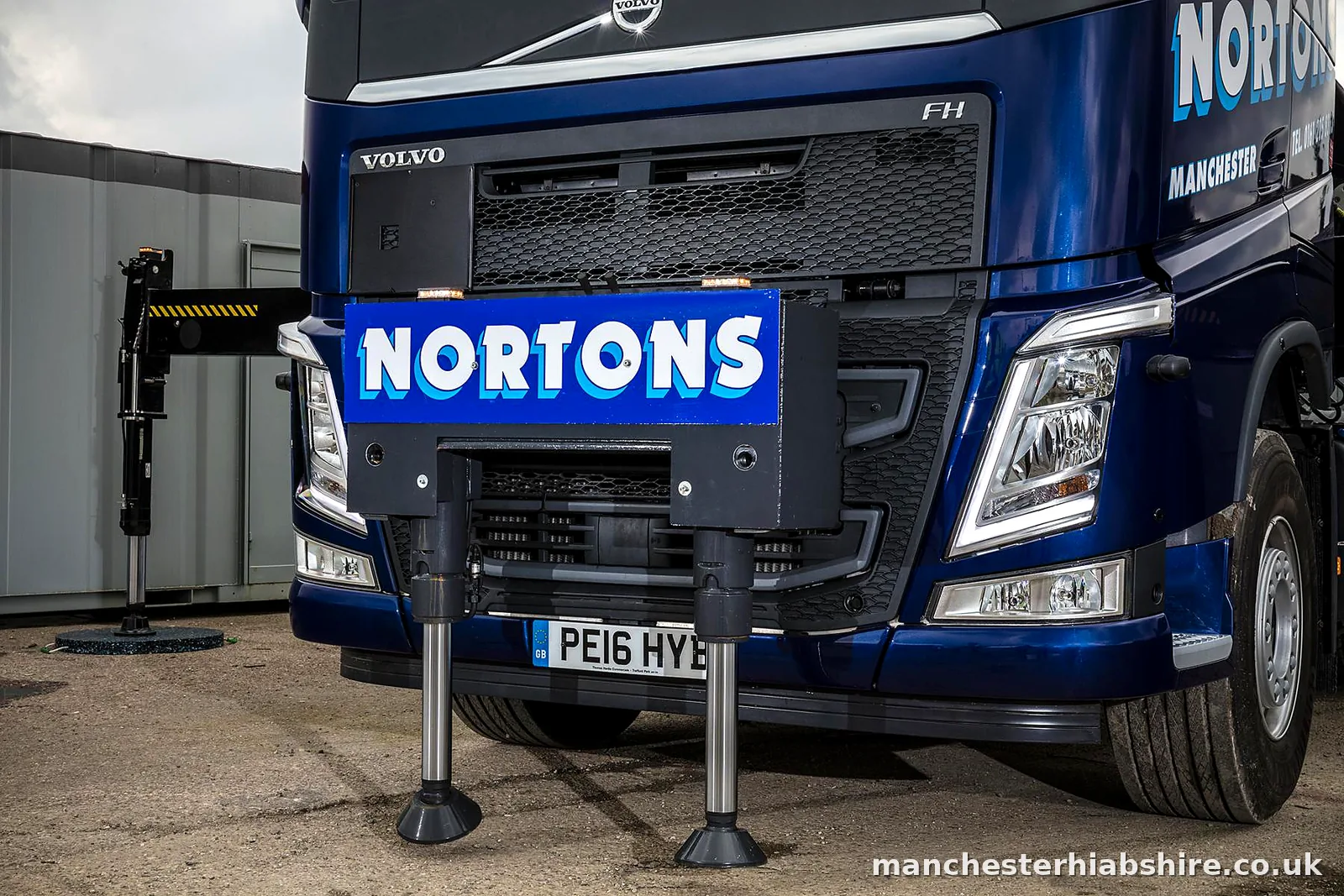
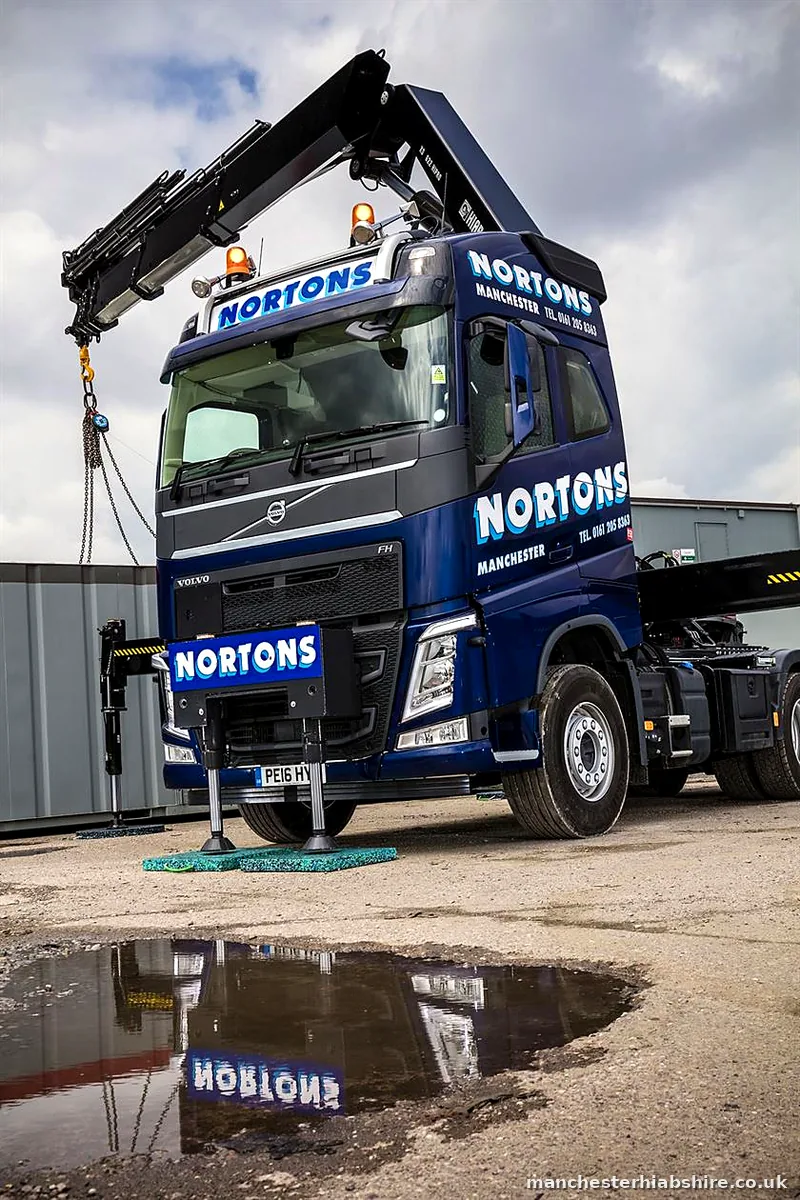
From about now until the spring, the first thing we want to know about a delivery address is what the lorry will be standing on. Not because we are fussy, but because a wet October changes what a surface will take.
A HIAB does not lift off its wheels. It puts its legs down and lifts off those, and the load, the boom and a good part of the lorry all come down through four small feet. Whatever is under those feet has to hold.
The surfaces that catch people out
Block paving looks solid and often is, until it is soaked. Then the bedding sand underneath moves and the blocks tip, and you are left with a dish in a customer's drive that someone has to make good.
A manhole cover or a gully in the wrong place is a common one. Covers are made to be driven over slowly, not to have a leg stood on them. We will move the standing position rather than risk it.
Fresh tarmac is the one people never think of. A drive laid a fortnight ago will mark under a leg, and on a mild day it marks badly. Older tarmac over a soft base does much the same once the rain has got into it.
Then there is the newly backfilled trench. A service trench that was filled and rolled last week can look identical to the ground either side of it and behave nothing like it. If anything has been dug on the site recently, tell us where.
Verges, gravel over topsoil, and anywhere a downpipe or a yard drain discharges are all worth a mention. So is a slope, because water runs off it onto whatever is at the bottom.
Spreader plates, and what they can and cannot fix
Our lorries carry spreader plates. A plate under each leg spreads the load over a wider patch instead of a foot sized one, and on a marginal surface that is often the difference between setting up and going home.
What a plate will not do is make bad ground good. If the surface is soft the whole way down, spreading the load at the top only gets you so far. That is why the ground is talked through when the lift is planned, so the standing position is settled before the lorry arrives.
The way to avoid that conversation is to have it in advance. If you know one corner of the yard goes soft, put the standing position somewhere else before we arrive. If you have got boards or plates on site, say so. If the only hardstanding is where the skip is, the skip may need to move.
What to tell us before we set off
Say what the surface is in plain terms. Concrete, tarmac, block paving, gravel, hardcore, grass. Say how old it is if it is new. Say if it drains badly or if there is standing water after rain, and say if anything has been dug recently.
A photograph of the standing area taken the morning after a wet night tells us more than any description, and it takes you thirty seconds.
Our site moves and machinery transport pages both go into how we plan around this on live sites. If you are not sure whether your ground is up to it, email us at info@manchesterhiabshire.co.uk and describe it. We would much rather sort it out now than on the day.
Need a lorry? Ask for a quote or email us and tell us what needs moving.